
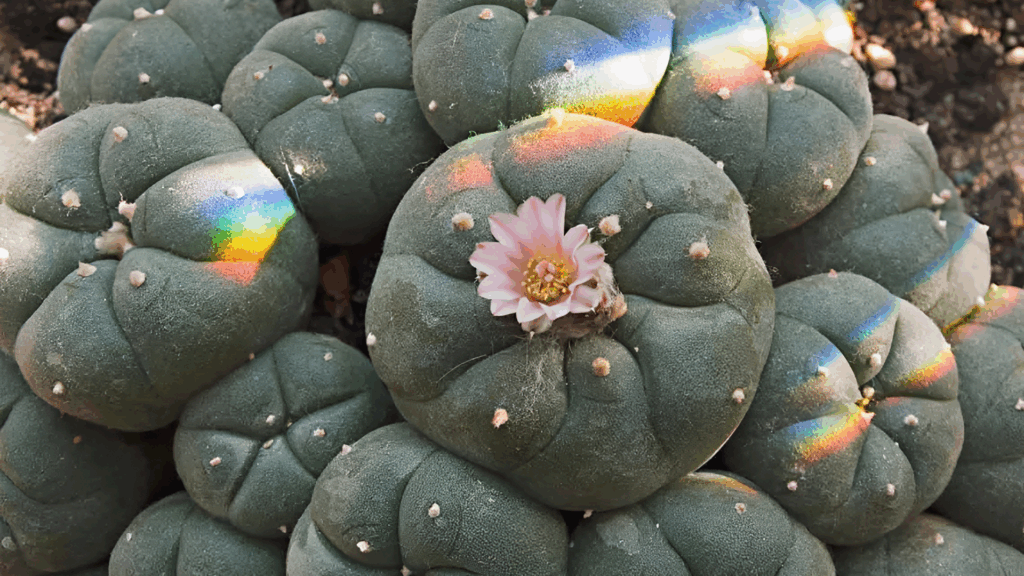
Mescaline is a naturally occurring psychoactive alkaloid produced by several cactus species, most notably peyote (Lophophora williamsii). Chemically, mescaline belongs to the phenethylamine class of compounds and is synthesized by the plant through its normal metabolic processes. Unlike synthetic psychoactive substances, mescaline in peyote is not created or altered by human intervention in the wild. (National Center for Biotechnology Information)
Within peyote, mescaline is one of more than fifty identified alkaloids, though it is the primary compound associated with the plant’s psychoactive properties. These alkaloids are distributed throughout the cactus tissue, with concentrations influenced by plant age, environmental conditions, and soil composition. Older, mature plants generally contain higher alkaloid levels than younger specimens. (PubChem – Mescaline)
From a plant science perspective, alkaloids like mescaline are believed to serve protective functions. Many plants produce alkaloids as a defense mechanism against herbivores and environmental stressors. In peyote, these compounds may discourage grazing and contribute to the plant’s survival in harsh desert ecosystems. (Encyclopaedia Britannica – Alkaloid Definition)
Mescaline’s chemical structure differs significantly from that of other well-known naturally occurring compounds such as psilocybin or synthetic substances like LSD. While all three interact with serotonin-related pathways in the brain, mescaline’s phenethylamine structure gives it distinct pharmacological characteristics. These differences are important when comparing plant-derived compounds across species and understanding their unique biological roles. (Nature Reviews Neuroscience)
Modern scientific research often studies mescaline independently rather than as part of whole peyote. This approach is largely driven by legal restrictions and conservation concerns surrounding peyote itself. Studying mescaline in isolation allows researchers to examine its properties without contributing to the depletion of vulnerable wild peyote populations. (National Center for Biotechnology Information)
Understanding mescaline as a naturally occurring alkaloid produced by peyote helps frame the plant within a broader botanical and chemical context. Rather than viewing peyote solely as a psychoactive organism, this perspective emphasizes its role as a complex living species shaped by evolution, environment, and natural chemistry. (U.S. Fish & Wildlife Service)
All information presented is for educational purposes only and focuses on plant science research and emerging studies. This content does not replace professional medical advice. Always consult licensed healthcare providers or trained professionals in plant-based science and natural health disciplines. All information provided is thought to be put to date with modern research and you should still do your own research and consult with professionals.